Restoring a damaged photo is a rewarding endeavor, especially for families looking to preserve cherished memories. This beginner’s guide will provide practical “photo restoration techniques” and essential repair tips to help you breathe new life into your treasured images. Understanding the significance of photo restoration is crucial, as it allows families to maintain their visual history for future generations. Often, photos can age, fade, or sustain damage due to environmental conditions, but with the right techniques and tools, you can make these images look nearly new again.
In this article, we will cover common types of photo damage and how to identify them, manual and digital restoration techniques suitable for beginners, and best practices for preserving your restored photos for years to come.
What Are Common Types of Photo Damage and How Can You Identify Them?
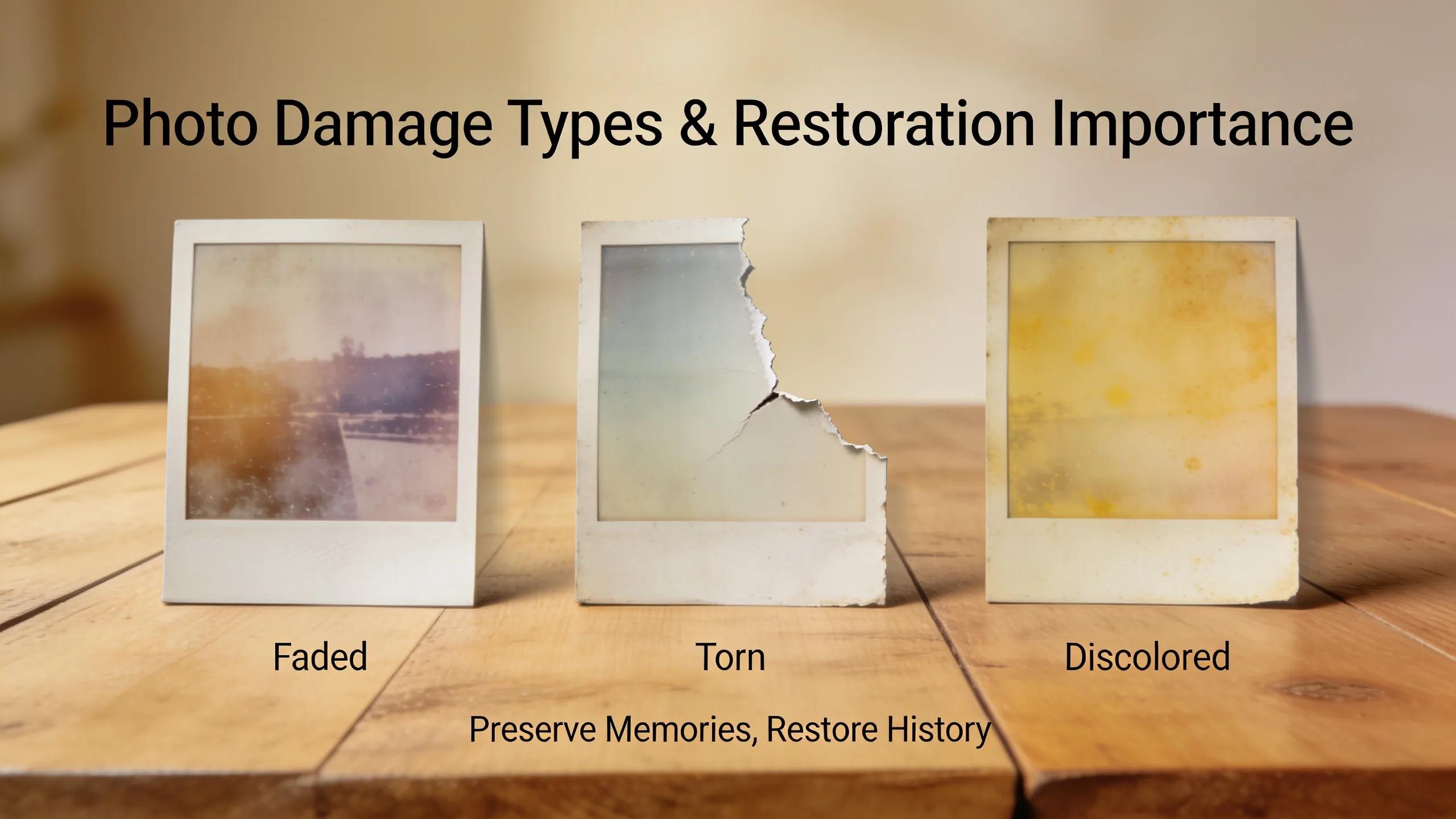
Photos can suffer a range of damages over time, and recognizing these issues is the first step towards effective restoration. Common types of photo damage include tears, fading, discoloration, and water damage. Understanding these categories helps in assessing the severity and determining the appropriate “restoration methods”.
Recent advancements in archival science emphasize the importance of accessible restoration workflows for both professional and non-technical users.
Innovative Digital Restoration Techniques for Damaged Photos and Manuscripts
This great omission motivates the development of new technology, presented by this thesis, that is not-only effective with deteriorated bound works, damaged manuscripts, and disintegrating photonegatives but also easily utilized by non-technical staff.
Innovative Techniques for Digitizing and Restoring Deteriorated Historical Documents, GV Landon Jr, 2008
What Signs Reveal Damage Severity in Family Photos?
When evaluating the severity of damage in family photos, look for specific visual cues. Signs of wear might include:
- Tears or Creases: Visible breaks or folds that disrupt the image.
- Fading: Areas where colors have shifted or lightened significantly.
- Discoloration: Yellowing or browning around the edges, typically from age or exposure to light.
- Water Stains: Marks or rippling caused by moisture exposure that can lead to mold if untreated.
Identifying these signs early is essential for determining the best restoration approach, ensuring that valuable memories can be effectively preserved.
Which Manual Restoration Techniques Can Beginners Use to Fix Torn or Damaged Photos?
Manual restoration techniques can be a great way for beginners to address physical damage to photographs. These hands-on methods generally involve careful attention to detail and the right tools to ensure successful repairs without further damaging the photo.
What Materials and Tools Are Needed for Basic Physical Photo Repair?
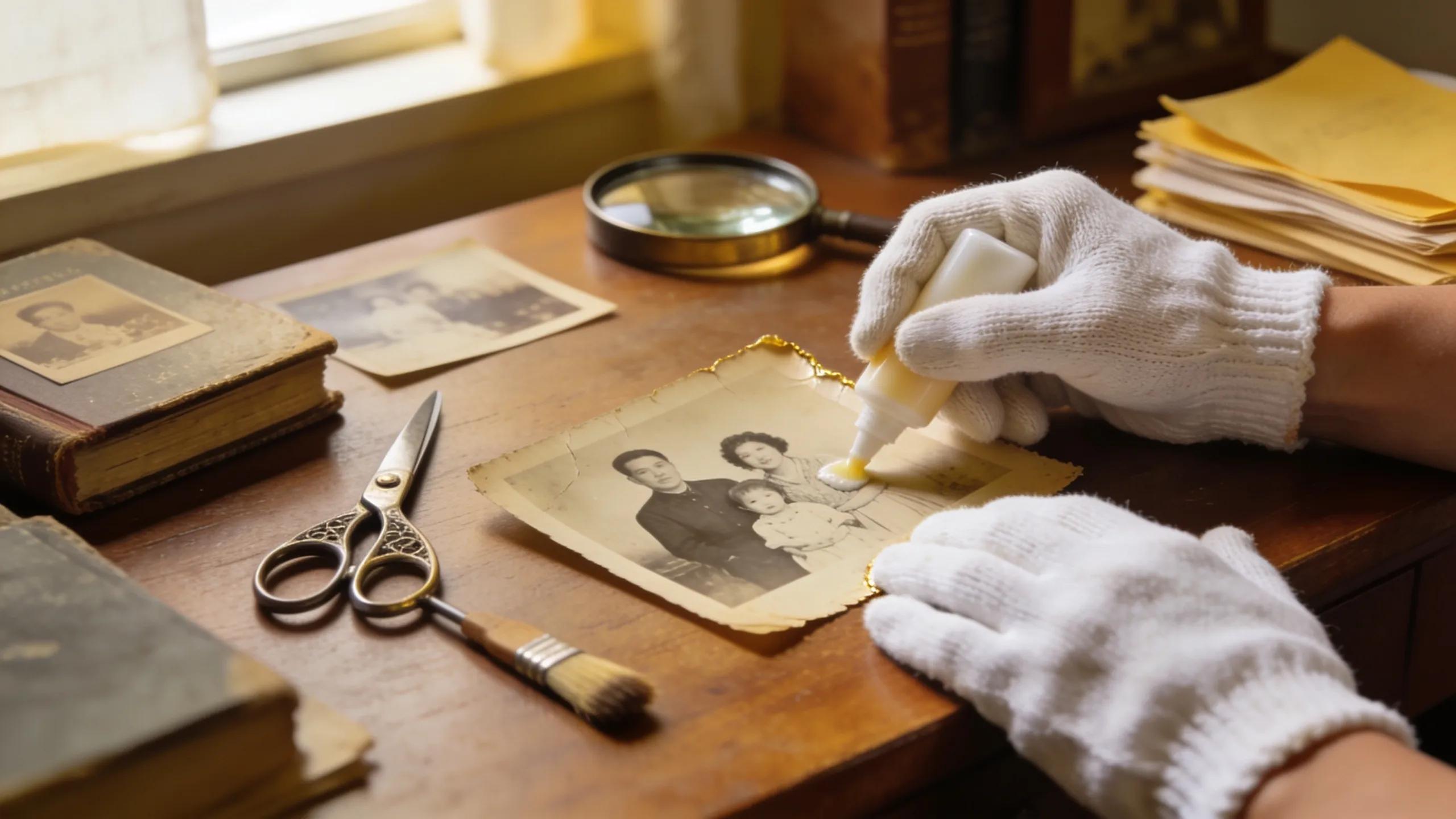
To successfully engage in manual photo repair, a basic toolkit is required. Essential materials include:
- Adhesives: Use photo-safe glue or archival tape to repair tears without causing further damage.
- Scissors and Cutters: Precision tools for trimming edges and removing damaged areas cleanly.
- Protective Equipment: Gloves to prevent oils from fingers transferring onto the photograph.
Having these materials on hand allows you to address a variety of damage types effectively and is ideal for beginners looking to get started on photo restoration.
What Digital Photo Restoration Tools and Software Are Best for Beginners?

In addition to manual restoration, digital photo restoration can significantly enhance or restore images. Various user-friendly “software tools” are available, providing powerful tools for beginners to try their hand at digital editing and restoration.
Modern restoration efforts are increasingly balancing traditional manual methods with emerging automated computer vision technologies to improve accuracy and efficiency.
Modern Frameworks for Restoring Historical Photographs
This paper addresses this challenge through two approaches: first, establishing a comprehensive framework for manual stereograph restoration that balances historical authenticity with viewing comfort; second, presenting our ongoing development of an automated pipeline that leverages recent advances in computer vision. Automatic Restoration of Historical Stereoscopic Photographs for 3D Visualization at Scale, D Gowda-Storz, 2025
Which Free or Simple Software Tools Are Recommended for Photo Restoration?
For those new to digital photo restoration, several free or simple software tools can be beneficial, including:
- GIMP: A free, open-source alternative to Photoshop that offers extensive photo editing capabilities.
- Paint.NET: User-friendly software ideal for beginners, providing easy access to basic editing tools.
- Photopea: An online editor that mimics Photoshop’s functionalities and can handle a variety of file formats.
These tools make it possible for anyone to begin restoring photos digitally without needing extensive training or expensive software.
How Can You Preserve Your Restored Photos to Keep Memories Lasting Longer?
Once you have successfully restored your photographs, preserving them becomes crucial in ensuring their longevity. Proper preservation techniques protect against future damage from environmental factors.
How Does Digitization Support Long-Term Photo Preservation?
Digitizing your restored photos adds a layer of protection against physical damage. Scanning provides digital copies that can be stored securely and accessed easily. Key benefits of digitization include:
- Backup: Having a digital version can protect against loss through physical damage.
- Sharing: Digital copies can be easily shared with family and friends, keeping memories alive.
- Accessibility: Easily create new prints or items from your digital files without additional wear on the original photo.
Adopting these methods for preserving restored photos allows families to cherish their memories for generations to come.
How to Date a Cabinet Card: Clues in the Mount, Border and Photographer's Imprint